
Spring travel does not always need to begin with a restaurant list or a hotel booking. Sometimes, the places that stay with you most are the ones where the interiors do part of the storytelling, where art, objects and atmosphere make you slow down and look properly.
As part of my spring travel diary, this is the kind of edit I keep coming back to: design-led spaces that feel worth building a day around. For spring layers that work from city walks to airport lounges, read this casual spring jackets edit too.
This season, three spaces keep returning to my mind for exactly that reason: Qeeboo Store in Milan, The Ritz-Carlton, Millenia Singapore, and Louis Vuitton Visionary Journeys in Seoul. Together, they show three different ways design can shape a destination, from playful collectible objects in Milan to museum-worthy art in Singapore and immersive exhibition storytelling in Seoul.
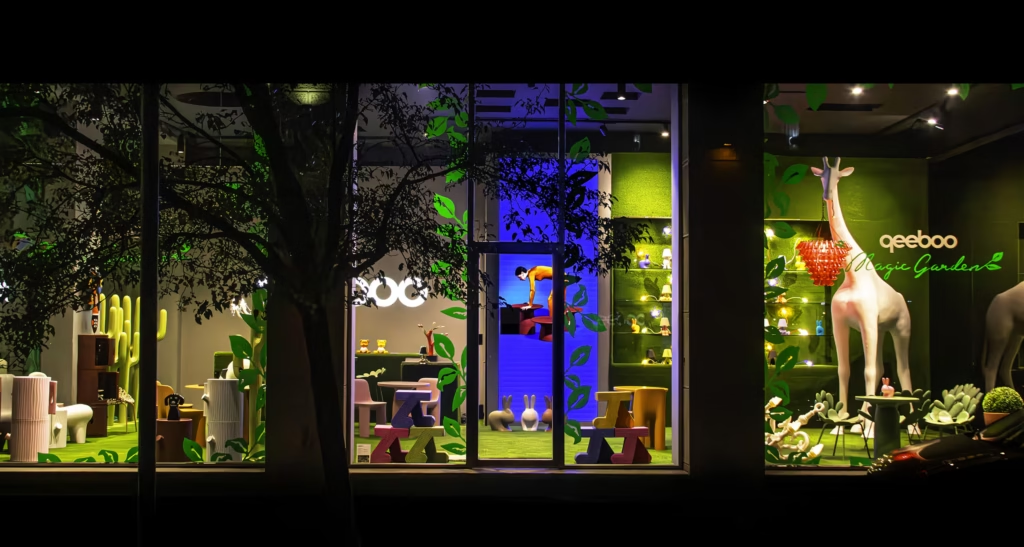
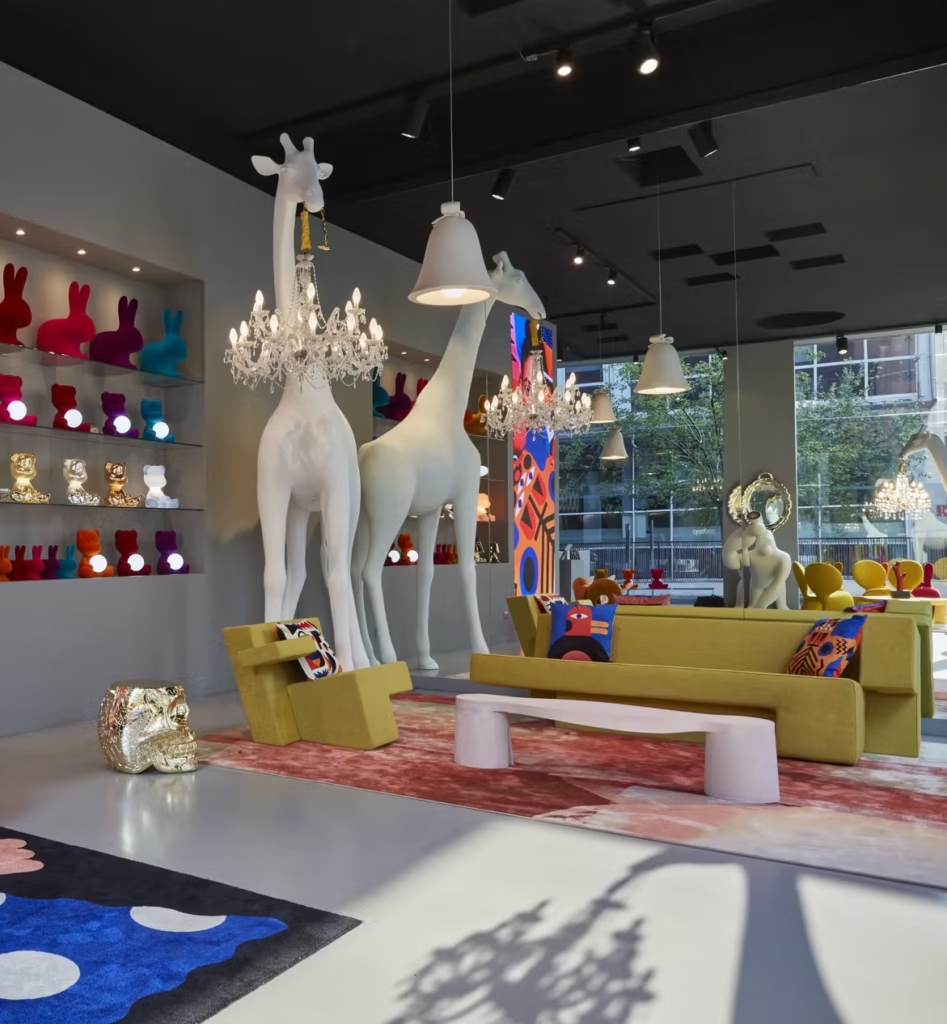
Milan always knows how to put design on display, but Qeeboo does it with more personality than most. Its store on Via Crocefisso 27 feels less like a standard showroom and more like a compact world of sculptural objects, playful silhouettes and collectable design energy, which makes it a strong stop for spring whether you are in the city for design events or simply in the mood for interiors with character.
What I like about Qeeboo is that it does not make design feel distant or overly serious. There is wit in it, colour in it, and a kind of visual confidence that makes the whole space feel lively rather than formal. That is exactly why it works beyond one specific week on the calendar.
Right now, there is also an added reason to visit. During Milan Design Week 2026, Qeeboo is unveiling a collaboration with Fiorucci that reimagines the brand’s iconic Rabbit Chair in Fiorucci’s signature Toys print, alongside matching poufs and cushions, with a dedicated installation at the flagship store.
So yes, Design Week gives it extra attention, but the real appeal is broader than that. Even outside the fair’s schedule, it is still the kind of place that fits neatly into a spring afternoon in Milan: visually energising, slightly surreal, and easy to enjoy whether you are deeply into design or just like spaces with personality.
At the time of writing, Qeeboo lists the store’s regular opening hours as Tuesday to Saturday, 10:00 am to 6:30 pm.


The Ritz-Carlton, Millenia Singapore is one of those places where the art is not an afterthought to the interiors; it is part of the reason to go. The hotel is home to one of the largest contemporary art collections in Southeast Asia, with 4,200 art pieces in total and around 350 museum-quality works, including names such as David Hockney, Andy Warhol, Frank Stella, Zhu Wei and Dale Chihuly.
For me, the Chihuly detail is especially personal. I first saw Dale Chihuly’s work at London’s V&A around 2013 and have been a fan ever since, so seeing his work here gives the space a real emotional pull rather than just a luxury one.
What makes this stop especially interesting now is the hotel’s augmented reality hotel art tour, which the hotel describes as the world’s first. It is a self-guided, web-hosted experience that lets visitors use their phones to interact with 14 key works around the property, with six pieces currently featuring augmented reality elements, while a Concierge-led tour also runs daily at 5 p.m.
Personally, I really like this idea because it feels like a more natural way for people to engage with art today. Most people already reach for their phones when they see something visually striking, so giving them a way to interact with the artwork rather than just photograph it makes the experience feel more alive, more memorable and, frankly, more fun.
It also makes the section more accessible to a broader audience. Visitors can browse written or audio narratives, follow an easy map through the hotel, and take photos or videos of themselves with the augmented elements, which gives the experience a playful, social side that I think adults will enjoy just as much as children. Rather than treating art as something distant or overly formal, it invites people into it.
The hotel itself supports that atmosphere beautifully. Much of the collection was specially commissioned for the property, and the interiors are shaped through Feng Shui principles, with chromafusion glass, light wood, water elements, gold accents and the Cornucopia sculpture in the lobby all helping create a bright, balanced environment.
At the time of writing, the self-guided AR art tour is listed as open 24 hours, while the Concierge-led art tour runs daily at 5 p.m. Afterwards, it is easy to continue the day around Marina Bay, with Gardens by the Bay, the ArtScience Museum and the Singapore Flyer all nearby.


Louis Vuitton Visionary Journeys, Seoul
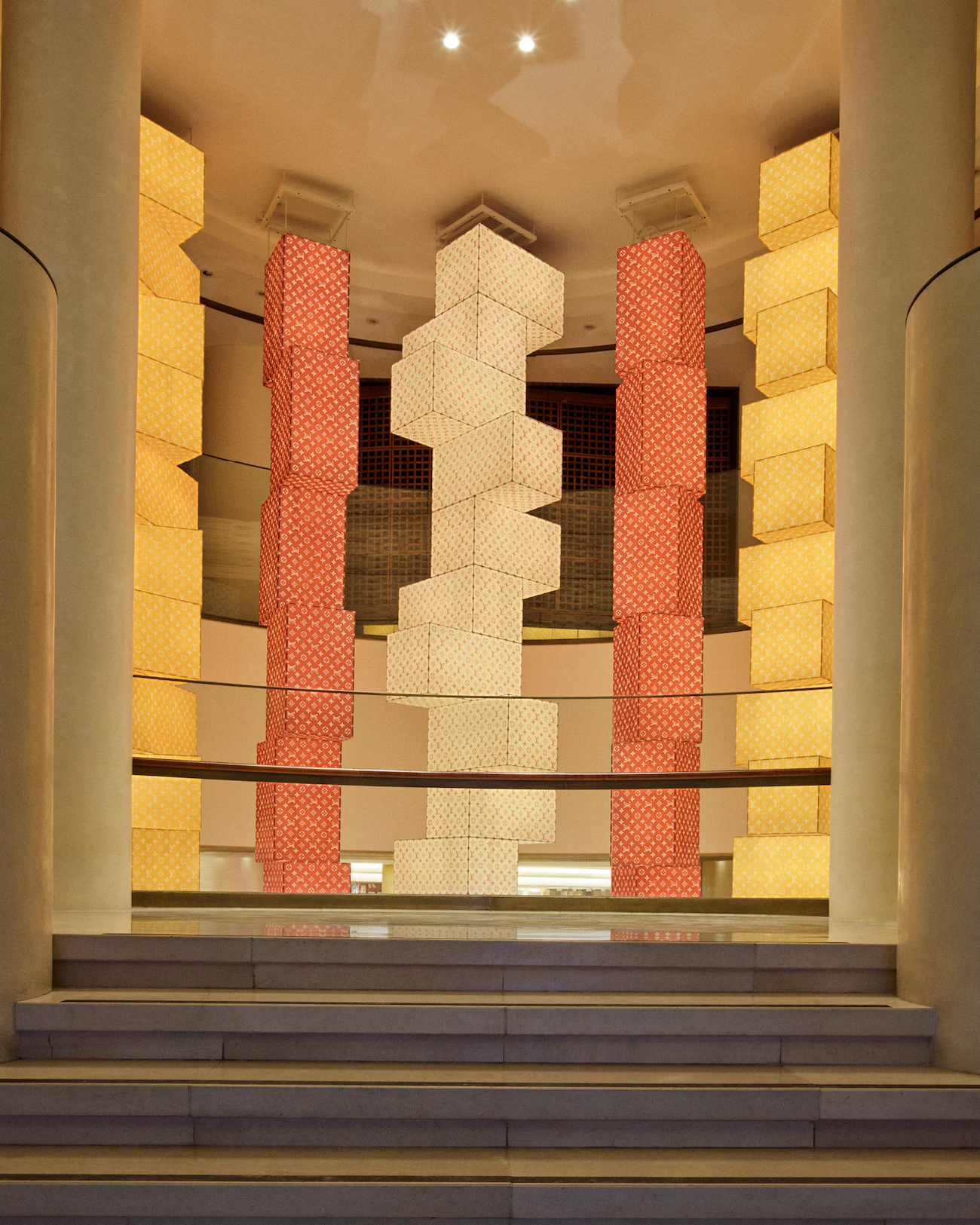
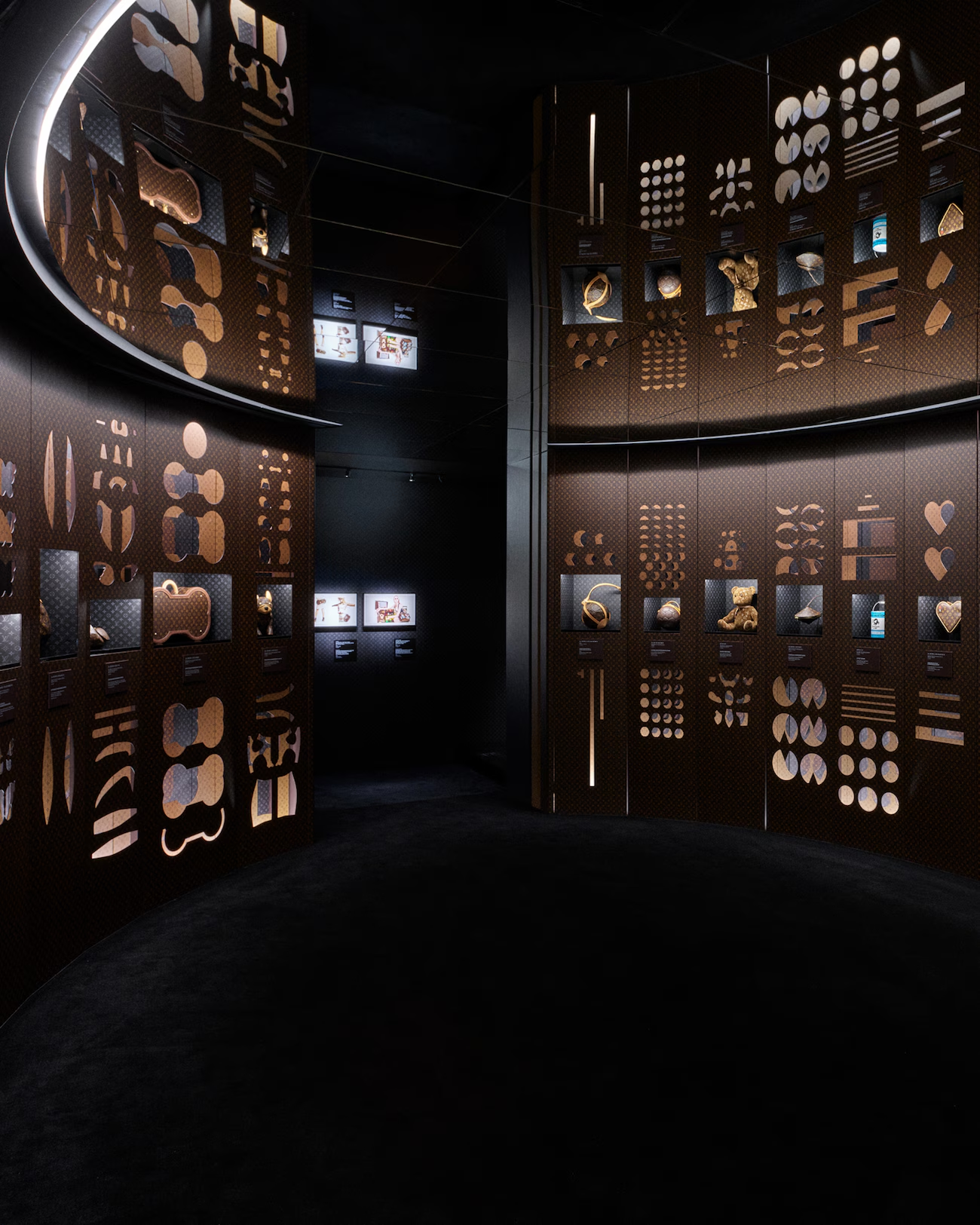
Louis Vuitton Visionary Journeys in Seoul doesn’t read to me as a conventional exhibition — it feels closer to a spatial essay. At LV The Place Seoul, the experience unfolds across 12 themed rooms, each one built around different strands of the house’s language: travel, craftsmanship, iconic trunks, and its wider cultural references. What stands out is not any single object, but the way the pacing shifts from room to room, almost like moving through chapters rather than galleries.
For me, this is where it becomes relevant beyond fashion. It sits firmly in that intersection between exhibition design and interior storytelling, where luxury is no longer about display but about control of atmosphere. The way each space is staged — through light, material transitions and rhythm — feels considered in a way that is closer to set design than retail.
At the time of writing, the exhibition runs Monday to Thursday from 10:30 to 20:00, and Friday to Sunday and public holidays from 10:30 to 20:30. Entry is free, with advance reservation recommended.



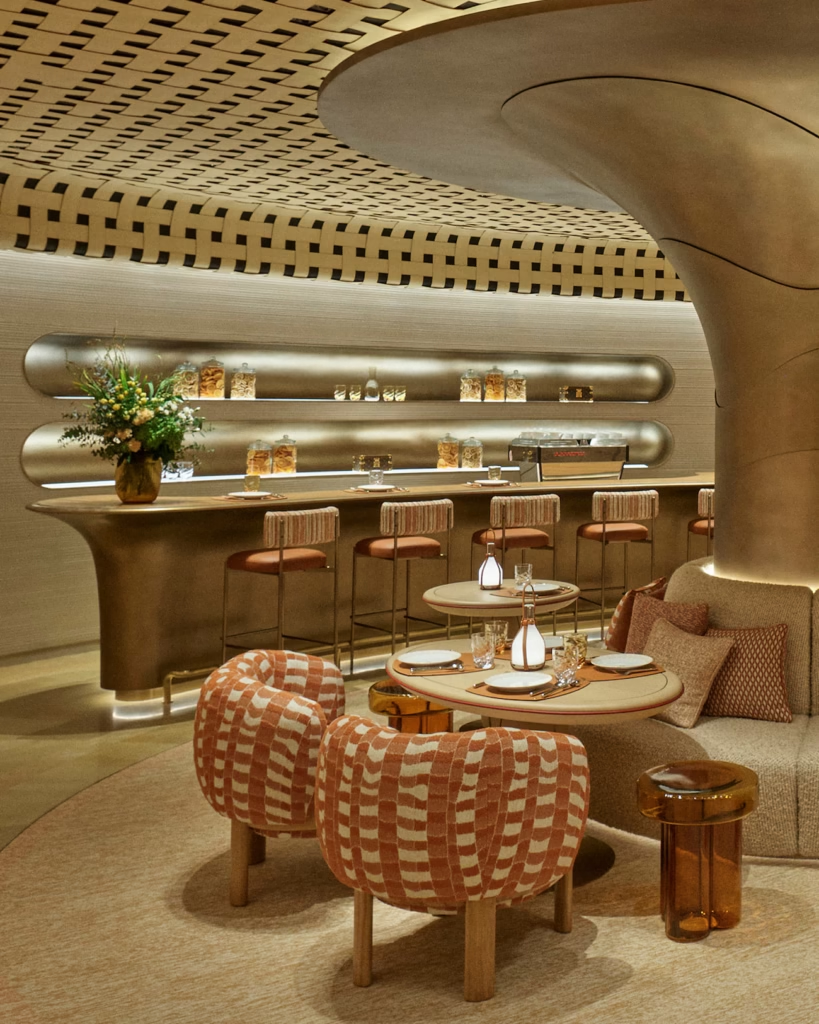
Le Café Louis Vuitton at Shinsegae The Reserve continues that same language rather than breaking it. I went in expecting a typical branded café moment, but what I found was more coherent than that. The monogram is everywhere, but it is not treated as surface decoration — it’s embedded into the objects you actually use. Plates, cutlery, desserts, even the drinks themselves carry that visual consistency, but in a way that still feels controlled and quite restrained.
What I personally liked is that it doesn’t try to separate itself from the exhibition as a “reward” space. It feels like part of the same narrative system — just slowed down. The café becomes a place where the visual intensity drops slightly, but the branding logic continues to hold, which makes the transition feel quite seamless.
This continuity matters. It means the experience doesn’t end at the final room — it extends into how you sit, order, and observe the space afterwards. It’s less about dining and more about staying inside the same constructed world for a little longer.
Even the more peripheral details carry that intention through. Nothing feels accidental, and even the most functional spaces maintain a level of visual discipline that keeps you inside the same designed environment rather than stepping out of it.
Overall, what stays with me is how complete the system feels. It’s not just an exhibition or a café — it’s a fully authored environment where Louis Vuitton controls not only what you see, but how long you stay in that visual language before you exit it.


From Milan to Singapore to Seoul, these three spaces prove that spring travel can be shaped as much by interiors as by itinerary. For me, that is what makes them interesting: each one offers a different kind of visual experience, but all of them remind you that good design does not just decorate a space — it changes the way you move through it.


